




SELANK
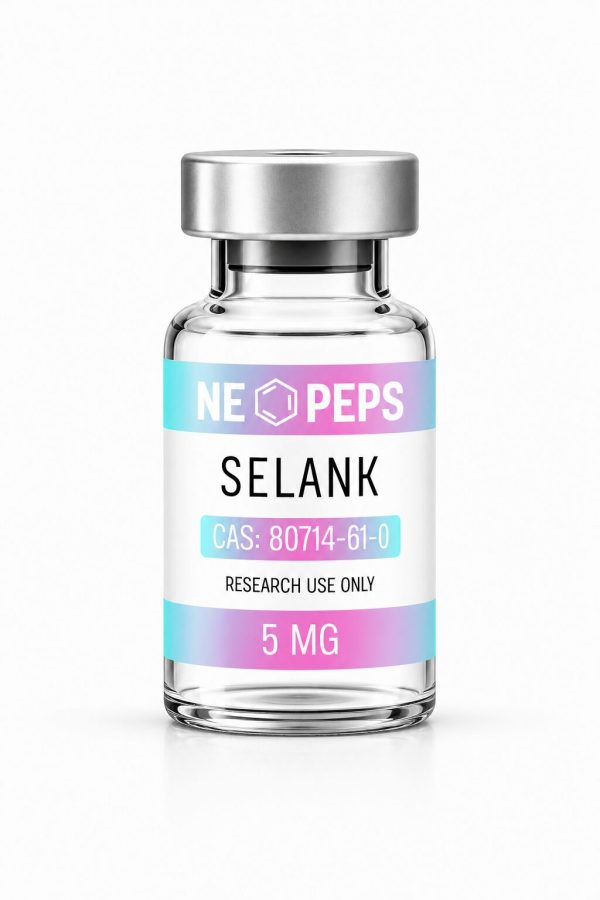
SELANK
Price range: 25,00 € through 40,00 €
Selank is a synthetic heptapeptide derived from tuftsin, a natural immune peptide, extended by three amino acids for stability. It was developed in Russia as an anxiolytic without sedative or dependence-forming properties and is studied for its effects on anxiety, attention and the balance of neurotransmitters such as GABA and serotonin.
 Independently testedEvery batch analyzed by Janoshik
 Fast shippingDispatched within 24h, EU-wide
Composition
Molecular profile.
Research
Published studies.
Peptide-based anxiolytics: the molecular aspects of heptapeptide Selank biological activity PubMed ↗ Efficacy and possible mechanisms of action of the peptide anxiolytic Selank in generalized anxiety disorders and neurasthenia PubMed ↗ Immunomodulatory effects of Selank in patients with anxiety-asthenic disorders PubMed ↗Storage
Handling & stability.
Lyophilized
Reconstituted
About this compound.
Selank is a synthetic heptapeptide derived from tuftsin, a natural immune peptide, extended by three amino acids for stability. It was developed in Russia as an anxiolytic without sedative or dependence-forming properties and is studied for its effects on anxiety, attention and the balance of neurotransmitters such as GABA and serotonin.
Selank modulates GABA-A receptor signaling, raises the neurotrophic factor BDNF and slows the breakdown of enkephalins, the body's own opioid peptides.
Research background
- In rats, Selank changed the expression of genes of the GABAergic system, increased BDNF in the hippocampus and inhibited enkephalin-degrading enzymes (Protein Pept Lett 2018, review).
- A clinical study in patients with generalized anxiety disorder compared Selank with the benzodiazepine medazepam, with anxiety scores, sedation and withdrawal symptoms as endpoints (Zozulia et al., 2008).
- A further clinical study examined immune markers such as interleukin-6 in patients with anxiety-asthenic disorders (Uchakina et al., 2008).
Research areas
- Anxiety and stress models
- GABAergic and serotonergic signaling
- Neuropeptide-based anxiolytics
Research Use Only. This product is intended exclusively for in vitro and laboratory research. It is not approved for human or veterinary use and no therapeutic claims are made. Handle with appropriate laboratory precautions.
Related products
-
TA1 | 5 MG
35,00 € -
MT 2 | 10 MG
30,00 € -
RETATRUTIDE
Price range: 170,00 € through 270,00 €Select options This product has multiple variants. The options may be chosen on the product page -
MT 1 | 10 MG
45,00 €