




Certificates of Analysis
Quality Assurance
Certificates of Analysis
Independently tested by Janoshik Analytical — purity, identity and content measured on the finished vial, and published unedited. Every result links to the laboratory’s own record, so you can check it yourself.
View certificatesWhy independent testing matters
The research peptide market is largely unregulated. Anyone can print a purity figure on a label, and most suppliers simply pass on the certificate their manufacturer gave them. The two most common problems are underfilled vials and material that is not the compound it claims to be.
Third-party analysis closes that gap. The laboratory receives sealed retail vials, has no stake in the outcome, and reports what the instruments measure — including when a batch falls short. That is what makes a certificate worth anything in the first place.
What the numbers mean
Purity (HPLC)
Chromatography separates the sample and reports what share of it is the target peptide. The remainder is synthesis residue — no synthetic peptide is 100 % pure. From 98 % upwards counts as research grade.
Identity (Mass spectrometry)
Measures the molecular weight and confirms it matches the expected sequence. This answers the most fundamental question: is the substance what the label says it is?
Net content
How many milligrams of peptide are actually in the vial? Small deviations in either direction are normal in production. What matters is that label and content stay close to each other.
Batch and verification
The batch code on the certificate matches the code on your vial. Each certificate also carries a QR code linking to the laboratory’s own record, so the document can be verified independently of us.
Certificates by product
Select a product to see the reported results and open the original certificate.
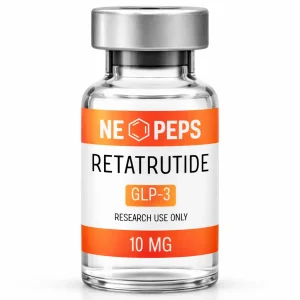
Retatrutide 10 mg
Analyzed in a blind GLP-1 panel — the laboratory identified the compound without being told which peptide the sample contained. Identity confirmed as Retatrutide. Additionally screened for endotoxins and heavy metals.
| Batch | NEO-RETA |
|---|---|
| Net content | 11.01 mg |
| Purity (HPLC) | 99.743 % |
| Identity (MS) | Confirmed |
| Additional tests | Endotoxins, heavy metals |
| Laboratory | Janoshik Analytical |
| Tested | 18 March 2026 |
| Verify at Janoshik | Purity #114456, Endotoxins #114457, Heavy metals #114458 |
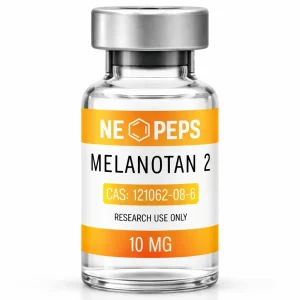
Melanotan 2 10 mg
The highest purity result of the current range. Identity confirmed by mass spectrometry.
| Batch | NEO-MT2 |
|---|---|
| Net content | 10.11 mg |
| Purity (HPLC) | 99.953 % |
| Identity (MS) | Confirmed |
| Laboratory | Janoshik Analytical |
| Tested | 30 April 2026 |
| Verify at Janoshik | #151280 |
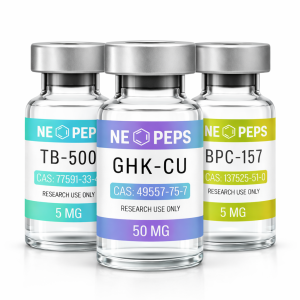
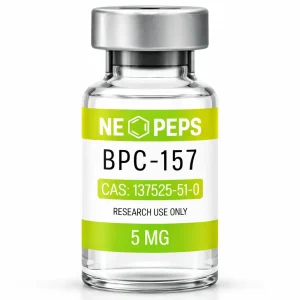
BPC-157 5 mg
Identity confirmed as the stable gastric pentadecapeptide sequence.
| Batch | NEO-BPC5 |
|---|---|
| Net content | 5.47 mg |
| Purity (HPLC) | 99.937 % |
| Identity (MS) | Confirmed |
| Laboratory | Janoshik Analytical |
| Tested | 30 April 2026 |
| Verify at Janoshik | #151281 |
TB-500 5 mg
Analyzed for TB4, TB-500 and TB4(17-23) to separate the full-length protein from the fragment. The laboratory ran this sample twice, as noted on the certificate.
| Batch | NEO-TB5 |
|---|---|
| Net content | 5.19 mg |
| Purity (HPLC) | 98.017 % |
| Note | Tested twice |
| Laboratory | Janoshik Analytical |
| Tested | 30 April 2026 |
| Verify at Janoshik | #151282 |
CJC-1295 no DAC 5 mg
Analyzed specifically as the no-DAC variant (Mod GRF 1-29), the shorter-acting form, which is frequently mislabeled across the market.
| Batch | NEO-CJC5 |
|---|---|
| Net content | 5.29 mg |
| Purity (HPLC) | 99.714 % |
| Variant | Mod GRF (1-29), no DAC |
| Laboratory | Janoshik Analytical |
| Tested | 30 April 2026 |
| Verify at Janoshik | #151284 |
Ipamorelin 5 mg
Identity confirmed by mass spectrometry.
| Batch | NEO-IPA5 |
|---|---|
| Net content | 4.84 mg |
| Purity (HPLC) | 99.859 % |
| Identity (MS) | Confirmed |
| Laboratory | Janoshik Analytical |
| Tested | 30 April 2026 |
| Verify at Janoshik | #151283 |
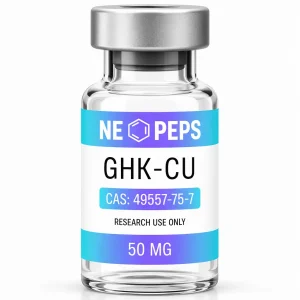
GHK-Cu 50 mg
As a copper complex, GHK-Cu is reported in three figures: total complex, GHK peptide content and copper content.
| Batch | NEO-GHK50 |
|---|---|
| Total complex | 55.71 mg |
| GHK content | 46.26 mg |
| Copper content | 9.45 mg |
| Purity (HPLC) | 99.855 % |
| Laboratory | Janoshik Analytical |
| Tested | 20 July 2026 |
| Verify at Janoshik | #205166 |
Epitalon
Analysis in progress. The certificate appears here as soon as the laboratory releases it.
KPV
Analysis in progress. The certificate appears here as soon as the laboratory releases it.
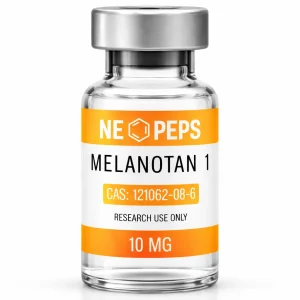
Melanotan 1
Analysis in progress. The certificate appears here as soon as the laboratory releases it.
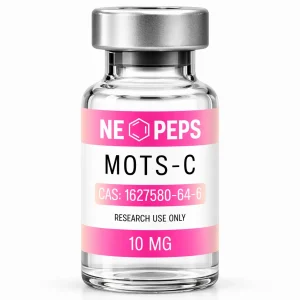
MOTS-c
Analysis in progress. The certificate appears here as soon as the laboratory releases it.
NAD+
Analysis in progress. The certificate appears here as soon as the laboratory releases it.
Selank
Analysis in progress. The certificate appears here as soon as the laboratory releases it.
Semax
Analysis in progress. The certificate appears here as soon as the laboratory releases it.
Tesamorelin
Analysis in progress. The certificate appears here as soon as the laboratory releases it.
Thymosin Alpha-1
Analysis in progress. The certificate appears here as soon as the laboratory releases it.
Frequently asked
How can I verify a certificate myself?
Every certificate carries a QR code that opens the record in the laboratory’s own system. If the values there match the certificate shown here, the document is genuine and unchanged.
Who is Janoshik Analytical?
An independent laboratory widely used for third-party verification of research peptides. It has no commercial relationship with NEOPEPS beyond being paid for the analysis.
Why is purity never exactly 100 %?
Synthesis always leaves trace amounts of related sequences and process residues. A result of 99.7 % means the target peptide makes up 99.7 % of the material analyzed.
What do these results say about effects?
Nothing. A certificate describes purity, identity and quantity of a substance — all NEOPEPS products are supplied for laboratory research use only. Background on the compounds is available in our Science section.