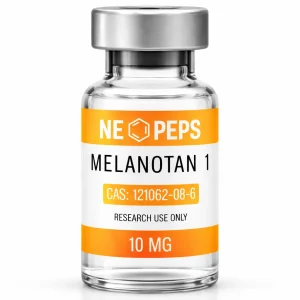





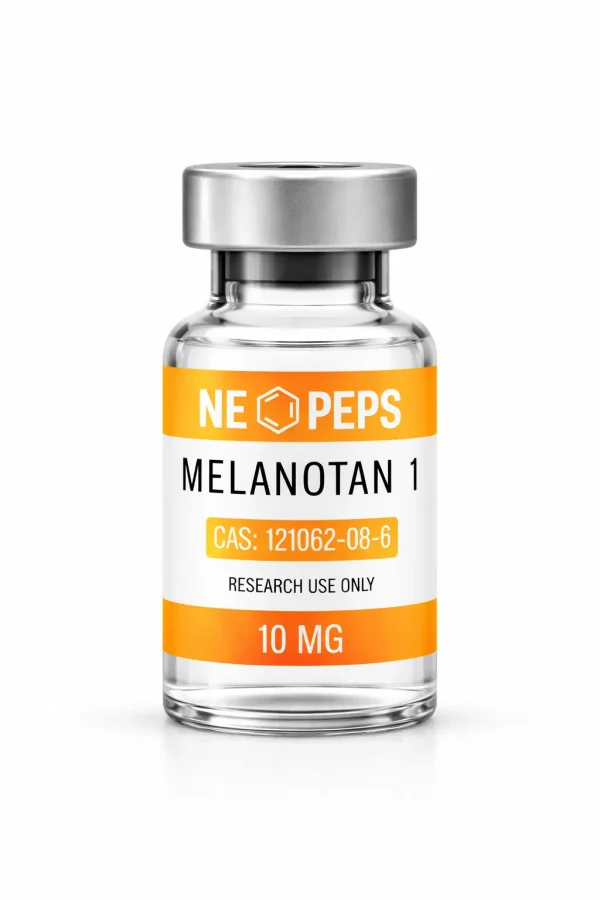
MT 1 | 10 MG
MT 1 | 10 MG
45,00 €
Melanotan I, also known as afamelanotide, is a linear analog of the pigmentation hormone alpha-MSH with two amino-acid substitutions that make it far more stable than the natural hormone. It selectively activates the MC1 receptor on pigment cells, the receptor that controls eumelanin production, and is studied in research on pigmentation and photoprotection.
Available Arrives between Nov 12 – Nov 16
 Independently testedEvery batch analyzed by Janoshik
 Fast shippingDispatched within 24h, EU-wide
Composition
Molecular profile.
Research
Published studies.
Melanocortin peptide therapeutics: historical milestones, clinical studies and commercialization PubMed ↗ Afamelanotide in protoporphyria and other skin diseases: a review PubMed ↗ Afamelanotide for erythropoietic protoporphyria PubMed ↗Storage
Handling & stability.
Lyophilized
Reconstituted
About this compound.
Melanotan I, also known as afamelanotide, is a linear analog of the pigmentation hormone alpha-MSH with two amino-acid substitutions that make it far more stable than the natural hormone. It selectively activates the MC1 receptor on pigment cells, the receptor that controls eumelanin production, and is studied in research on pigmentation and photoprotection.
Norleucine at position 4 and D-phenylalanine at position 7 protect the peptide from enzymatic breakdown and greatly increase its receptor potency compared with alpha-MSH.
Research background
- The development of Melanotan I from alpha-MSH, its MC1R selectivity and the early clinical pigmentation studies are summarized by the peptide's inventors (Hadley & Dorr, Peptides 2006).
- Reviews describe its examination in erythropoietic protoporphyria and other light-sensitive skin conditions (Postepy Dermatol Alergol 2024).
- Two phase 3 trials examined afamelanotide in patients with erythropoietic protoporphyria; the primary endpoint was the time spent in direct sunlight without pain (Langendonk et al., N Engl J Med 2015).
Research areas
- MC1R-selective pigmentation
- Photoprotection and phototoxicity models
- Melanocortin structure–activity relationships
Research Use Only. This product is intended exclusively for in vitro and laboratory research. It is not approved for human or veterinary use and no therapeutic claims are made. Handle with appropriate laboratory precautions.
Related products
-
MOTS-C | 10 MG
40,00 € -
IPAMORELIN
Price range: 35,00 € through 50,00 €Select options This product has multiple variants. The options may be chosen on the product page -
MT 2 | 10 MG
30,00 € -
TB-500
Price range: 35,00 € through 45,00 €Select options This product has multiple variants. The options may be chosen on the product page