




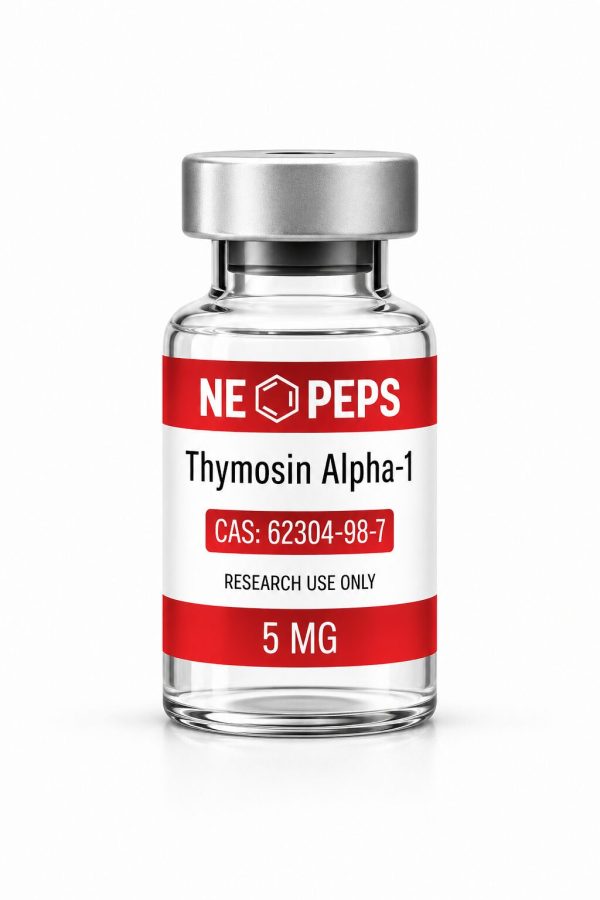
TA1 | 5 MG
TA1 | 5 MG
35,00 €
Thymosin alpha 1, also known as thymalfasin, is a 28-amino-acid peptide originally isolated from the thymus, the organ in which T cells mature. It is a natural regulator of the immune response and is studied in research on T-cell maturation, antiviral immunity and the aging immune system.
Available Arrives between Nov 12 – Nov 16
 Independently testedEvery batch analyzed by Janoshik
 Fast shippingDispatched within 24h, EU-wide
Composition
Molecular profile.
Research
Published studies.
Thymosin alpha 1: a comprehensive review of the literature PubMed ↗ Entecavir plus thymosin alpha-1 versus entecavir monotherapy in HBV-related cirrhosis: a systematic review and meta-analysis PubMed ↗ Thymosin alpha 1: reimagine its broader applications in the immuno-oncology era PubMed ↗Storage
Handling & stability.
Lyophilized
Reconstituted
About this compound.
Thymosin alpha 1, also known as thymalfasin, is a 28-amino-acid peptide originally isolated from the thymus, the organ in which T cells mature. It is a natural regulator of the immune response and is studied in research on T-cell maturation, antiviral immunity and the aging immune system.
The peptide acts on Toll-like receptors of dendritic cells and promotes the maturation of T cells, a mechanism examined mainly in the context of viral infections and immune aging.
Research background
- A comprehensive review summarizes its immunological mechanisms and the clinical studies conducted with it over four decades (King & Tuthill, World J Virol 2020).
- A meta-analysis examined thymosin alpha 1 in combination with entecavir in HBV-related cirrhosis, with virological and biochemical response as endpoints (Peng et al., BMC Gastroenterol 2020).
- Current research examines thymosin alpha 1 as an immune modulator in oncology and in infection-related immune dysfunction (Mao et al., Int Immunopharmacol 2023).
Research areas
- T-cell maturation and dendritic cell activation
- Antiviral immune response
- Immunosenescence and vaccine adjuvant research
Research Use Only. This product is intended exclusively for in vitro and laboratory research. It is not approved for human or veterinary use and no therapeutic claims are made. Handle with appropriate laboratory precautions.
Related products
-
CJC-1295
Price range: 35,00 € through 55,00 €Select options This product has multiple variants. The options may be chosen on the product page -
SELANK
Price range: 25,00 € through 40,00 €Select options This product has multiple variants. The options may be chosen on the product page -
MT 1 | 10 MG
45,00 € -
BPC-157
Price range: 30,00 € through 45,00 €Select options This product has multiple variants. The options may be chosen on the product page